5 mistakes limiting the Alameda Housing Portal’s potential
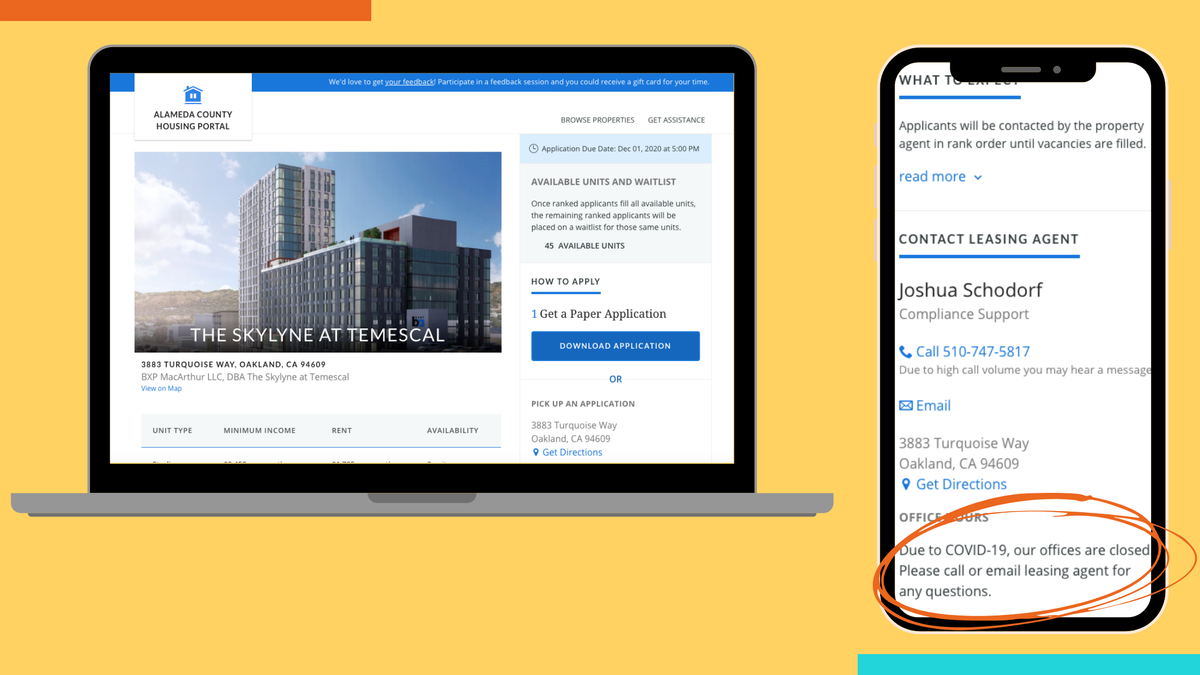
Last August, the Alameda County Housing and Community Development Agency quietly revealed the Alameda County Housing Portal. It is a carbon copy of the City & County of San Francisco’s DAHLIA in every way that is visible to site viewers; but fails to remove a number of known barriers for applicants. Failure to remove these barriers also stands in the way of expeditiously housing people. And, to borrow the County's mission statement "enrich the lives of Alameda County residents through visionary policies and accessible, responsive, and effective services."
A bit of context. In 2016, San Francisco launched a portal in an effort to streamline the housing search and application process for applicants. There, applicants can apply for multiple properties by completing a single application, submit applications and certifying documentation required with just a few taps. It simplifies a process that previously required trips across town, printing paper copies, sometimes stamps and a most cherished resource, time. Bringing that vision to life required not just a new website, but multiple city departments and private developers to alter their business practices when processing and selecting applicants to house.
In many ways, Alameda’s Housing Portal is similar. The design is clean, information is well organized, the property photos are beautiful and the listing details have a standard format. This is where the similarities end. Alameda's Portal lacks all functionality. The website header says it's an alpha site, which leads us to believe they do not plan to add this functionality at a later date, or else it would be tested in this alpha. Here’s what's wrong with it in more detail:
1: You can’t apply online
The website is merely a place to view listings. You can download an application to print and mail, or drop off in person. It’s not possible to submit an application online or any other documents required to qualify. What the county is calling a portal is really just an informational webpage.
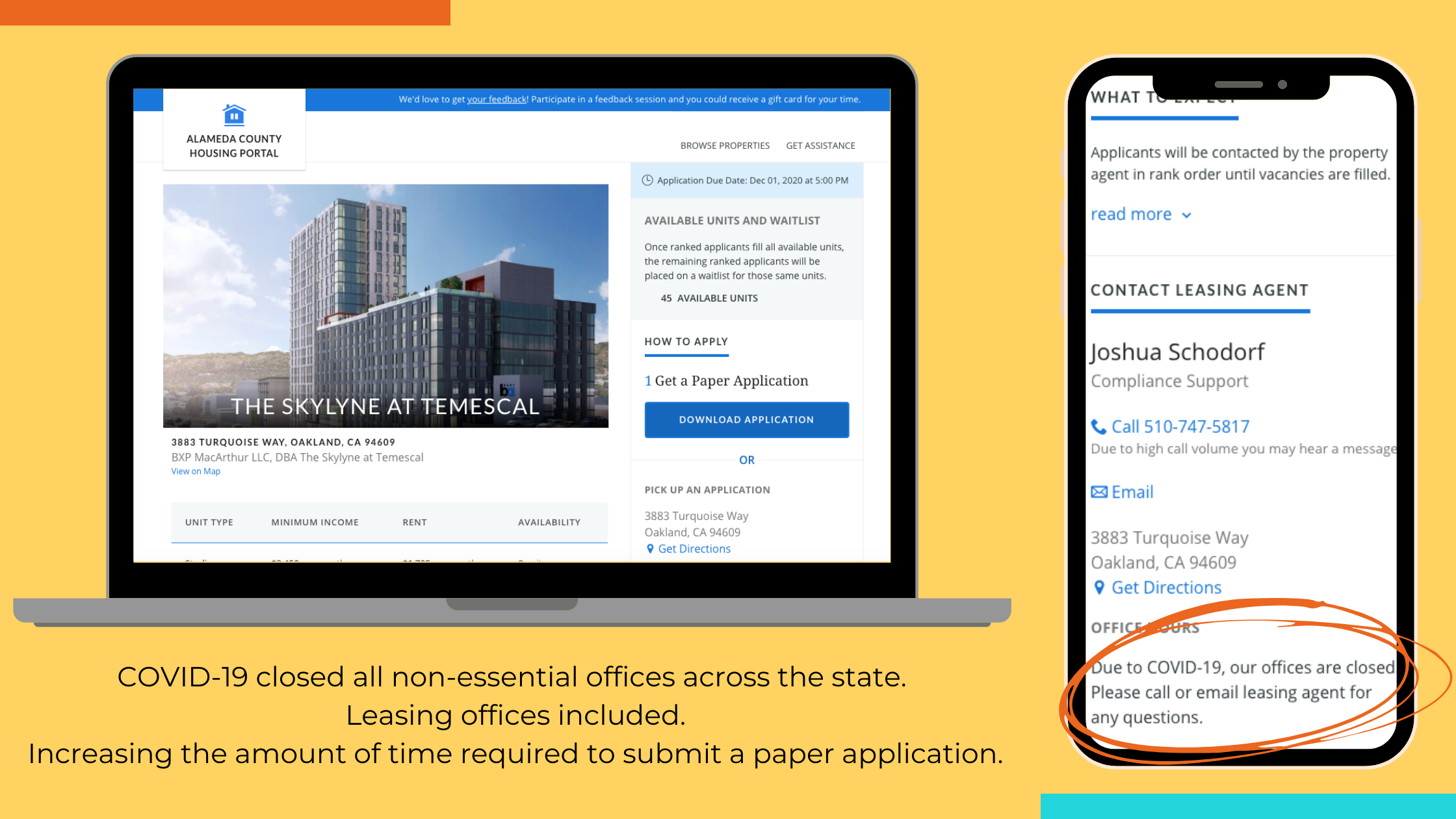
According to a 2017 post from Exygy, the digital agency that partnered with SF to develop San Francisco’s Housing Portal, “92% of people apply online when there is an option to do so.” So what happened here?
2: The eligibility estimator is missing, which makes selecting a winner very inefficient
Below market rate (BMR) units are nearly sealed shut with red tape that determines who and under what specific circumstances applicants may qualify for a unit. Say there are two identical units available in the same city and county. Depending on the kind of funding the developers used to build them, it’s possible that an applicant could qualify for one unit but not the other.
An eligibility calculator saves an applicant time and energy, by guiding the applicant to focus energy where there’s a good chance their effort will pay off. After sharing information about their situation, the eligibility calculator returns a list of attainable units. Without an eligibility calculator, it’s extremely difficult to understand which units an applicant qualifies for. Income and family size are not the only criteria by which an application is evaluated. Some cities also consider your current address, work location, accessibility needs and other circumstances when evaluating applicants.
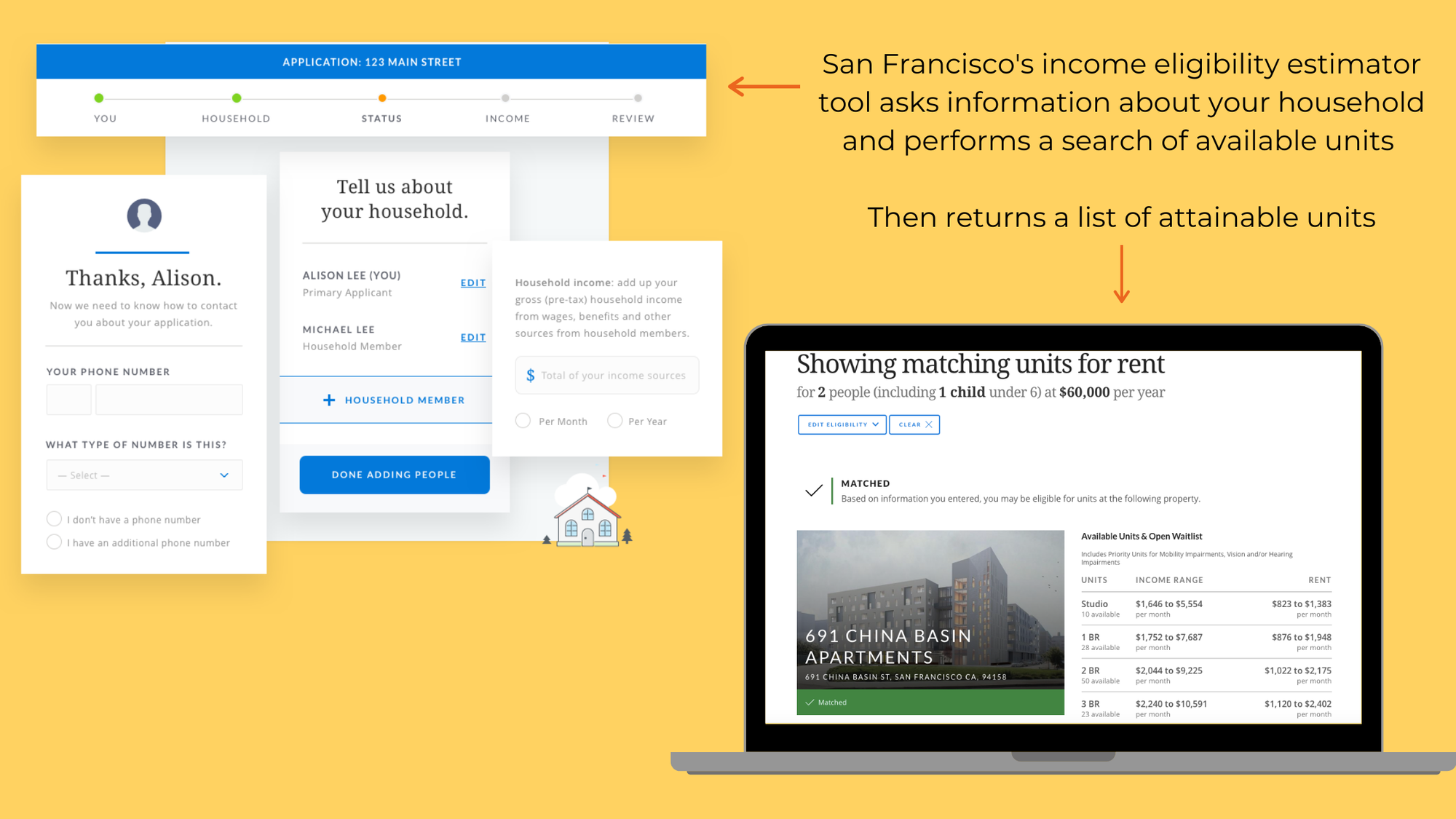
3: I can’t submit qualifying documents
After submitting your application, the developer processes it and your name goes on a list of applicants. You are called if BMR units are available when your name is up. At that time, you are asked to provide the documentation that qualifies or disqualifies you.
If you do not qualify, it is likely that you never did. You spent energy applying, and however many days in line waiting, for a unit you never had a chance of getting into. The developer spent staff time processing your application just to say, you’re ineligible. A real waste of resources for both parties involved. Prior to the determination, there’s zero visibility on your application status.
So what? They’ll just go to the next person on the list until the available units are filled. Yes, and as time marches on and people seeking housing are paying for SRO rooms, living outside or overstaying their welcome with friends or family. Every day that passes and they remain unhoused, is a day filled with more difficulty and danger than is necessary.
It’s also possible that someone who does qualify is waiting longer than necessary on the waitlist behind you, if the developer decides to hold one. Many developers do not, which returns applicants back to square one.
Applicants should be pre-qualified at the time they apply, instead of when units become available, so that neither party wastes precious time pursuing efforts that will not be fruitful. This way the applicant list is populated only with people who qualify for the available units and developers can give applicants on the list a better sense of their chance of success.
4: The process of selecting a winner is left to the discretion of the developer.
This should not be the process. The developer is not incentivized to place qualifying applicants into BMR housing that is designated for that explicit purpose. They are incentivized to avoid finding suitable applicants to match their requirements, because they will generate more profit from renting as many units as possible at market rate.
Even if the developer promised a number of affordable units during the planning phase of the development project, but could not find enough qualified BMR applicants to fill the affordable units, nothing stops them from filling vacancies with market rate tenants.
5: Are these even all the properties?
Looking at the housing portal you’d think there’s only one building in Alameda County that is accepting applications for BMR housing. A quick visit to the East Bay Asian Local Development Corporation and RCDhousing.org websites reveal 64 separate properties in the county currently accepting applications for BMR housing opportunities.
Someone unfamiliar with the structure of local government and its partners may not know to look for alternate types of housing opportunities, like nonprofit housing or the names of the organizations that provide them. The Housing Portal has the ability to be a single source of truth for all things housing. It should reduce the burden placed on the most vulnerable person in this equation, the person seeking housing.
In Conclusion
The Housing and Community Development Department really missed the boat. It’s clear that the desire to improve exists, but without doing the systems change work to alter processes that take place behind the scenes, this portal release is merely an exercise in dressing up business as usual.
In the time of COVID where people need access to housing more than ever, this is not acceptable. There’s a lot of room for improvement with the Alameda County Housing Portal.
The good news is that the City by the Bay has already done the hard work, and open sourced the playbook via GitHub. Open Source software is software that is created and distributed with the intent for others to copy, modify and enhance it. This approach to developing software shares many of the same values as cooperative communities: open exchange, collaborative participation, transparency and community-oriented development. The San Francisco Digital Services Team created this code and published it for other cities to copy and build upon, in service of reducing development time and expediting getting people housed. Alameda County should copy more than the code, it’s critical that they not just launch a nicely designed website, but also give some thought to redesigning their internal process. It is our hope that this post helps Housing and Community Development leadership set aside resources to improve what has the potential to be a really valuable asset for renters looking for a place to call home.
Renting blows. And we clearly can't wait for government solutions. Collaborate with your neighbors and buy your building. We’ll show you how. Join Us.